
A Machine for Living In: The Modernist House and the Gadgets It Never Needed
Le Corbusier coined the phrase 'a machine for living in' not to celebrate gadgetry, but the elegance of efficient design. Today, our homes are often burdened by smart features that promise convenience but deliver complexity and planned obsolescence.
When Le Corbusier declared the house to be “a machine for living in,” he wasn’t talking about voice-activated toasters or fridges that order groceries. He was articulating a radical vision: a home designed with the precision and functional elegance of an engine, stripped of unnecessary ornamentation, focused on light, air, and the flow of human life within its walls. Think of the crisp lines of the Villa Savoye, or the open plan of a Bauhaus residence. These were spaces engineered for modern life, yes, but their ‘machinery’ was plumbing, ventilation, and structural ingenuity – not a parade of blinking lights and monthly subscriptions.
The Machine That Wasn't Electronic
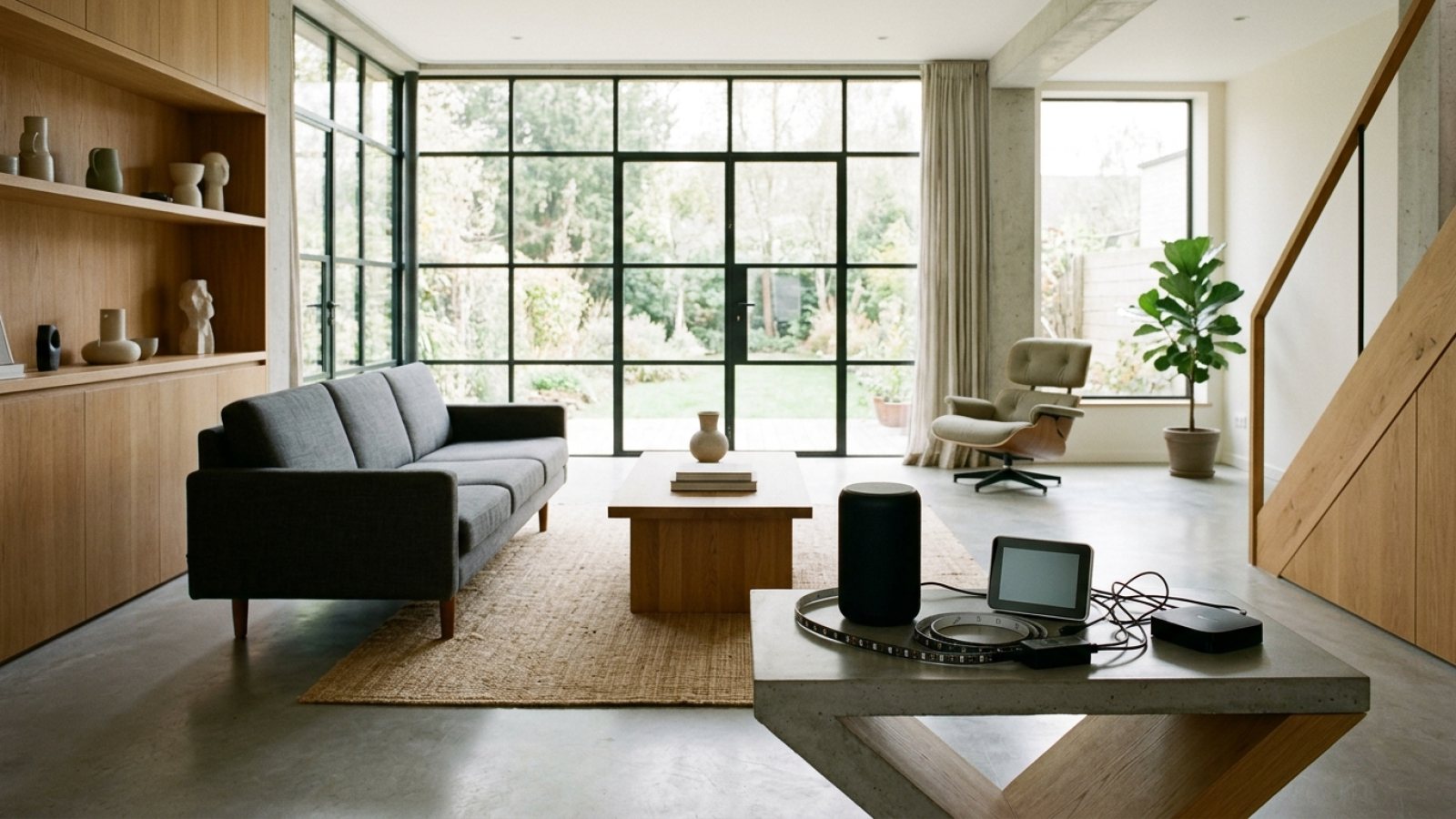
The early modernists championed a purity of form, an honesty of materials. Concrete, steel, glass – these weren't just aesthetic choices; they were the tools for creating healthy, efficient, and adaptable environments. The 'smart' features of these homes were built-in: generous windows for natural light and passive heating, carefully oriented spaces for cross-ventilation, kitchens designed for ergonomic flow. The furniture, too, was an extension of this philosophy: an Eames lounge chair wasn't just comfortable, it was a beautifully engineered piece of domestic technology designed to last generations, repairable, and utterly self-sufficient. There was a quiet dignity to these spaces, an assumption that the house itself, meticulously considered, would provide the essential comforts without requiring constant digital intervention.
I admit, I have a soft spot for a well-made sofa – the kind that cradles you just right and promises decades of steadfast service. It’s the antithesis of the disposable, the ephemeral. It’s about building a home, not a data center. The modernist ideal was about creating a backdrop for life, a robust container that celebrated its inhabitants, rather than competing for their attention with firmware updates and endless notifications.
The Gadget Creep
Fast forward a century, and Le Corbusier's metaphor has been contorted into something almost unrecognizable. The phrase "smart home" now conjures images of an ecosystem riddled with digital tripwires: lights that need Wi-Fi to turn on, door locks that communicate with cloud servers, thermostats that learn your habits (and sometimes sell them). This isn’t elegant engineering; it’s a relentless, often fragile, network of dependencies. The promise is convenience; the reality is often frustration, security vulnerabilities, and a creeping sense that you’re less an owner and more a tenant of your own home, beholden to external servers and planned obsolescence.
This is where enshittification truly digs its heels in. Products you bought are hobbled by mandatory subscriptions, features are removed, or the device simply stops working because the manufacturer decided to pull the plug on its backend services. Your “smart” lightbulb, once a simple source of illumination, becomes a brick if the company goes under. The quiet sanctuary envisioned by the modernists is replaced by an always-on data funnel, and the humble domestic appliance becomes a Trojan horse for corporate control.
Reclaiming the Modern Ideal
What then, is the truly modern approach to living in the 21st century? It's about remembering the original spirit of the machine for living in: functionality, durability, and human-centered design. It means choosing quality over quantity, investing in things that last and perform their intended function beautifully, without demanding a monthly fee or a constant internet connection. It's about a proper stereo system that plays music without spying on you, a robust coffee maker that doesn't need an app, and lights that simply… turn on. It means embracing truly smart design – like passive house principles or modular furniture – rather than superficial gadgetry.
A truly modern home isn't cluttered with tech for tech's sake. It's a place of respite, a space designed to support life, not to manage it through a remote interface. We should seek out technology that simplifies, not complicates, and that respects our autonomy. Let the house be a machine for living in, yes, but let its gears be well-oiled, silently efficient, and entirely yours.
