
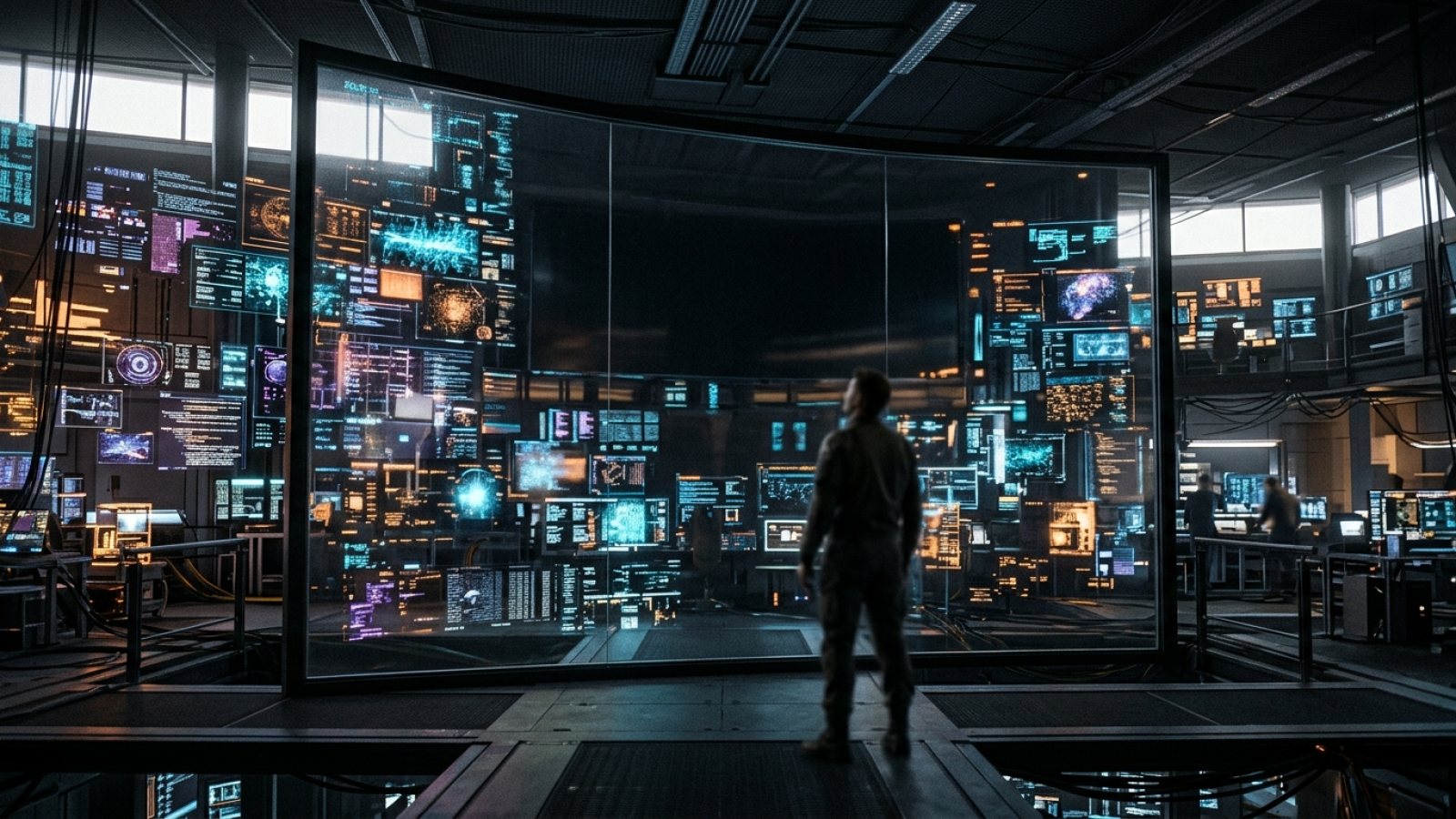
The Single Pane of Glass: The Myth of Total Control
The dream of the Single Pane of Glass (SPOG) promises total information, unified control. From sci-fi bridges to corporate dashboards, it’s a seductive vision of digital omniscience, but does it truly serve us, or just complicate our lives?
There it is: the Single Pane of Glass. A glowing altar of total command, whispering promises of ultimate leverage and power. From the earliest science fiction to the corporate boardroom, the vision of a single, all-encompassing display has captivated us. We yearn for the god’s-eye view, the one screen that shows everything, controls everything, simplifying complexity into a sublime, digital tableau. But, like so many promises delivered by our technology, the reality of the SPOG rarely lives up to the fantasy. Often, it just means more buttons, more alerts, and less actual control.
The Allure of the Omniscient Interface
The concept of the Single Pane of Glass isn’t new. You can trace its lineage back to the command centers of mid-century military operations, where maps and data were physically arranged to give a single, unified picture. Then came the screen. Imagine the bridge of the USS Enterprise in Star Trek: The Original Series, where Captain Kirk surveyed his universe from a few, well-placed panels. It wasn't exactly a single pane, but it was a consolidated command center, hinting at the future. Fast forward to the beautifully minimal, almost invisible glass-top console that controls everything in the film Oblivion, and you see the evolution of this desire: total integration, absolute control, wrapped in an aesthetic so clean it almost disappears.
This isn't just about efficiency; it's about elegance. We’re drawn to the idea of a perfectly designed interface that distills vast amounts of information into digestible insights. It speaks to that part of me that secretly pores over architectural digests, appreciating the clean lines of a perfectly lit modern home, the thoughtful placement of every object. A well-designed SPOG, in theory, is the ultimate expression of this ethos: everything in its place, everything accounted for. The ultimate goal? To simplify, to streamline, to put all the world’s complexity at our fingertips.
The Swarm Behind the Glass
And then there’s reality. Take your average “smart” home app, promising control over every light, thermostat, and door lock from one screen. What you get is often a cluttered mess of icons, slow load times, and features you never asked for, nestled behind a monthly subscription you certainly didn't. This, my friends, is prime territory for enshittification—a term coined by writer Cory Doctorow in 2022 to describe how platforms and products degrade in quality to extract more value from users and vendors. The SPOG, in its current corporate iteration, is often a thinly veiled attempt to force everything into one ecosystem, not for your convenience, but for their data harvesting and monetization.
Your smartphone itself is the ultimate personal SPOG, a portable window to the world. But how often do you feel truly in control, rather than overwhelmed by notifications, updates, and the relentless creep of advertising into every corner? The corporate dashboard, meanwhile, designed to give executives “strategic oversight,” often presents a deluge of numbers without context, failing to deliver actual insight. It's not about what you see; it's about what you understand and can act upon. A single pane crammed with irrelevant data is just a shiny distraction. Give me a robust, well-made mechanical switch that does one job perfectly over a virtual slider any day.
Beyond the Screen: Towards Thoughtful Tools
So, is the Single Pane of Glass the apex of human-computer interaction? Frankly, no. The future of interfaces, if we’re smart, lies not in cramming more onto one screen, but in thoughtful decentralization and purpose-built tools. Imagine ambient interfaces that provide information contextually, when and where you need it, without demanding your full attention. Think about specialized physical controls that offer tactile feedback and direct interaction, designed to perform one function beautifully and reliably. No firmware updates required.
We need to move past the illusion of total control and embrace the power of focused interaction. Sometimes, the best interface is no interface at all—a quiet moment without a glowing screen. Sometimes it’s the simple satisfaction of a well-designed appliance that does its job without connecting to the cloud. The ultimate control isn't found in a single, overwhelming display, but in choosing the right tool for the right job, and knowing when to leave the gadget at home. Let’s demand interfaces that serve us, not just display everything. The future is about precision, not endless panes of glass.
