
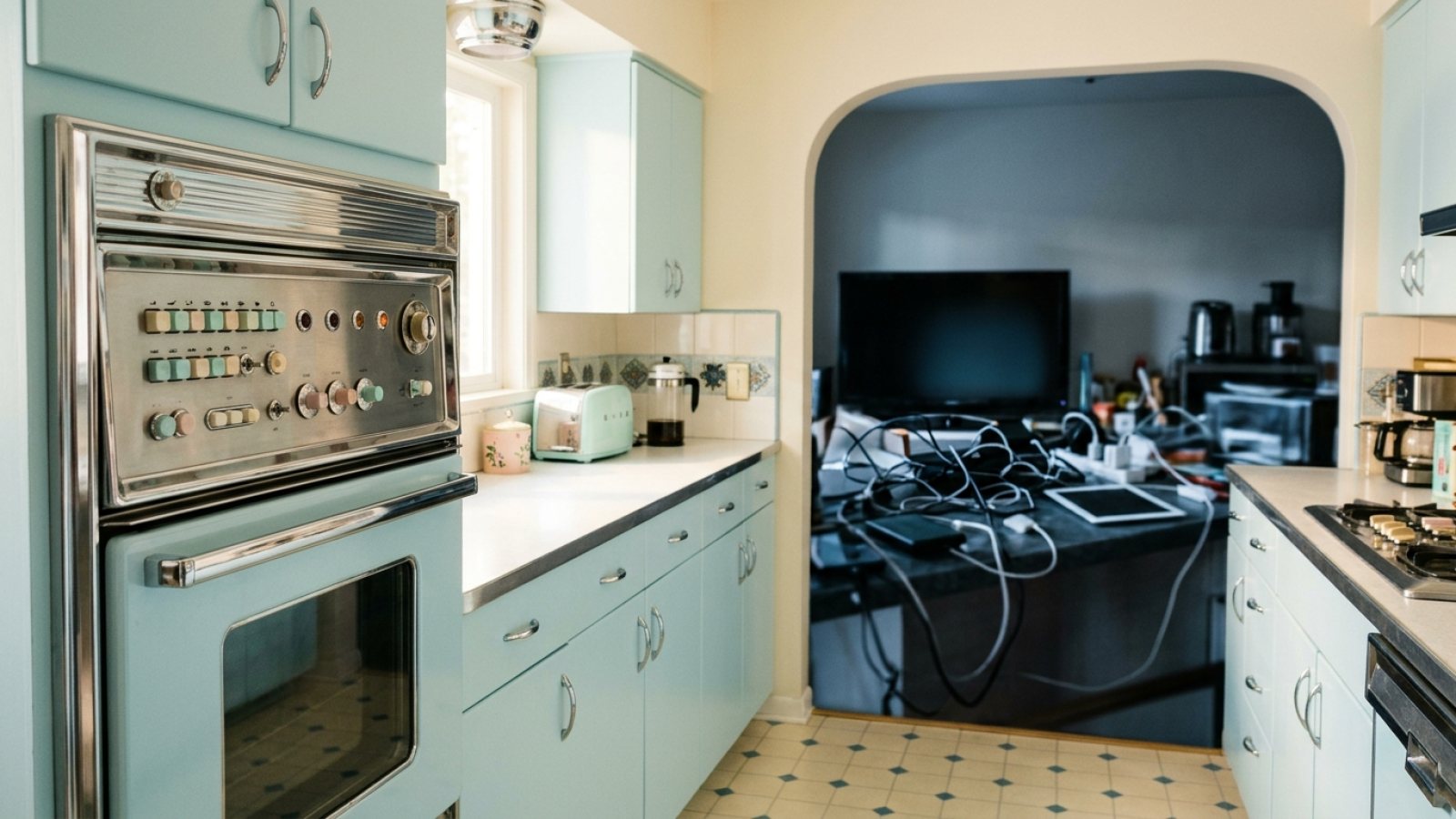
The Push-Button Kitchen of Tomorrow: What the 1950s Promised and What We Actually Got
The mid-century dream of a fully automated kitchen, freed from all domestic drudgery, never quite arrived. Instead, we've gotten something far more complicated, and often, much worse.
The future, as imagined in the 1950s, was a gleaming, push-button paradise. And nowhere was this vision more vivid than in the kitchen. Post-war optimism fueled an industrial design boom, promising liberation from domestic toil through electrification and automation. We were told of homes where food prepared itself, dishes vanished without a splash, and robotic arms presented perfectly roasted dinners with a courteous bow. The dream was clear: less work, more leisure. A grand promise indeed.
The Jetsons' Dream: Push-Buttons and Perfection
Walk through any exhibition hall of the mid-20th century, or watch films like General Motors' lavish 1956 spectacle, Design for Dreaming, and you’ll see it: the Kitchen of Tomorrow. It was a wonderland of integrated appliances, countertop control panels, and the ubiquitous push-button. Refrigerators stocked themselves, ovens pre-heated with a mere touch, and dishwashers silently sanitized. The aesthetic was clean, futuristic, often in pastel hues or gleaming chrome. Everything was built-in, streamlined, designed to minimize visual clutter and maximize efficiency. It was about making domestic life effortless, almost magical. The ideal user was a well-coiffed housewife, gracefully gliding through her tasks, never breaking a sweat.
This vision, while perhaps naive, stemmed from a genuine desire to improve quality of life. It celebrated the potential of technology to serve humanity, to reduce drudgery, and to provide more time for family and personal pursuits. It was, in its own way, an ode to good design serving a practical purpose – albeit often with a heavy dose of aspirational marketing. I confess, there's a part of me, the part that secretly loves a well-made mid-century sofa, that finds the sleek, integrated designs utterly charming. But even then, I suspect some of those push-buttons were more for show than substance.
From Robot Maids to Rebooted Refrigerators
So, what did we actually get? We got dishwashers that work. We got microwaves that zap leftovers in seconds. We got powerful blenders and food processors that simplify prep work. These are genuine advancements, no doubt. But the fully automated kitchen? The self-cleaning oven that actually cleans itself without needing a caustic chemical bath? Not so much. Instead, we got something far more insidious, something the writer Cory Doctorow aptly termed "enshittification."
Today's so-called "smart" kitchens are often a testament to this decline. Refrigerators that demand firmware updates, ovens that require a Wi-Fi connection to preheat (and a subscription to access advanced features!), and coffee makers that refuse third-party pods. The sleek control panels of the past have been replaced by touchscreens that lag and apps that crash. We traded genuine convenience for digital complexity, durability for planned obsolescence, and ownership for rental agreements on our own appliances. My simple, robust coffee grinder, a true mechanical marvel, does one job beautifully and will outlast me. My neighbor's "smart" toaster, however, can't decide if it wants to connect to the network or just burn the sourdough.
The Kitchen We Deserve
The future of the kitchen shouldn't be about more buttons or more screens; it should be about better living. It's time to reject the enshittified kitchen of today and demand a return to thoughtful design and lasting utility. We need appliances that are built to last, easily repairable, and perform their core functions with elegance and efficiency, without demanding our data or a monthly fee. Good light, plenty of counter space, a stove that cooks evenly, and a sink that handles a full day’s pots and pans without complaint – these are the foundations of a truly modern kitchen.
The ideal kitchen of tomorrow should embrace modularity, allowing components to be upgraded or replaced without tearing out the entire space. It should be a place where technology serves the cook, not the other way around. Imagine smart sensors that monitor food freshness or optimize energy usage, integrated seamlessly, working silently in the background, never demanding your attention or a software patch. This isn't about removing technology; it's about making it invisible and indispensable, allowing us to focus on the joy of cooking, the pleasure of sharing real food, and the comfort of good company around a long table. We deserve a future where our tools empower us, not entrap us in an ecosystem of digital demands. Choose simple, choose durable, choose well.
