
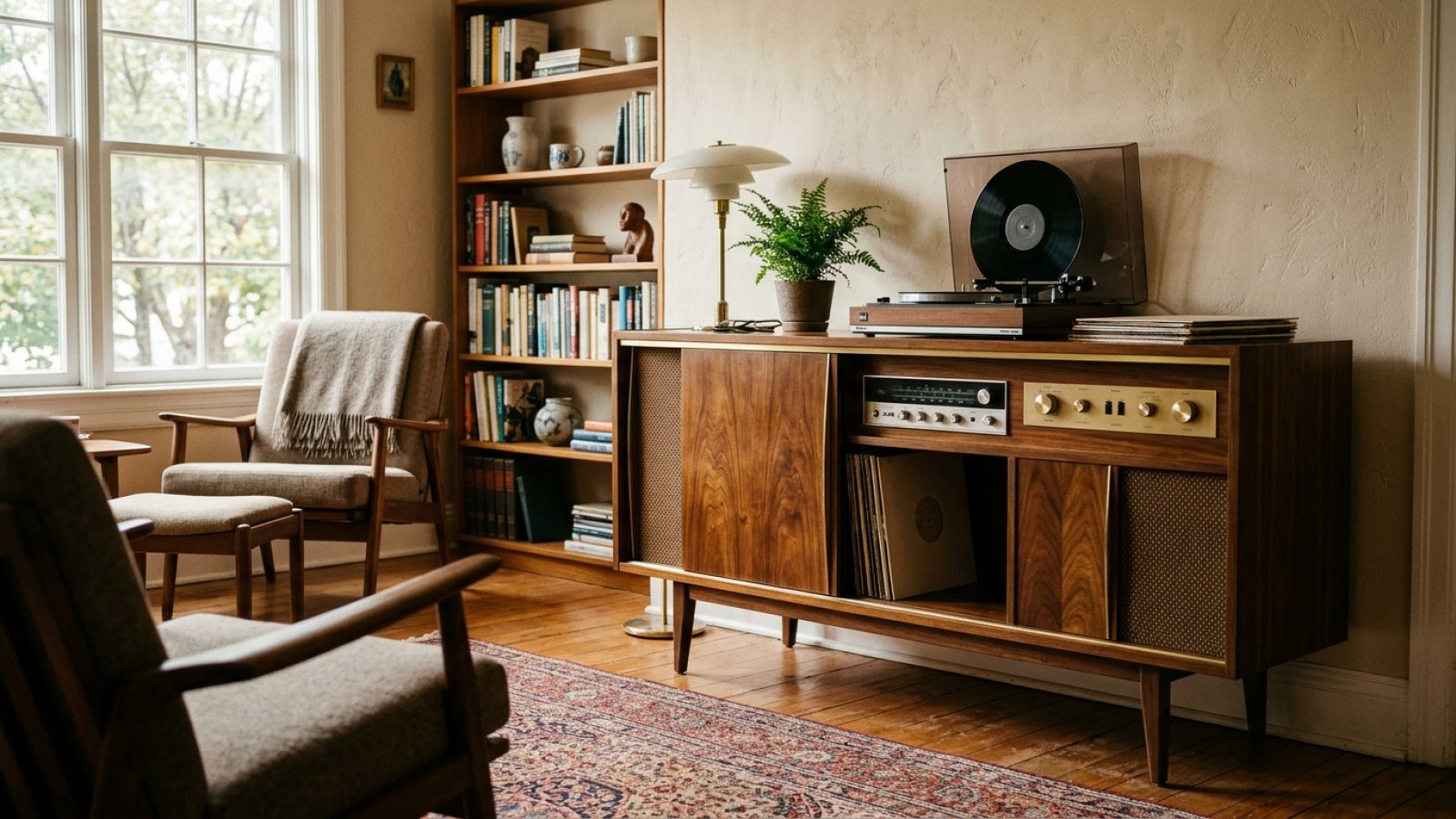
When the Stereo Was Furniture: The Lost Art of Listening and the Quiet Rebellion
Once, the stereo wasn’t just a device; it was a monument in the living room, a beautifully crafted piece of furniture. Today, our listening experience has been fragmented and diluted, but a quiet revolution is brewing.
There’s a ghost in my living room. Not a sheet-wearing specter, but the memory of a piece of furniture that once commanded respect, demanded attention, and occasionally, made you truly listen: the mid-century hi-fi console. It sat there, a benevolent overlord of sound, a polished walnut sentinel in a well-appointed room. These aren't just fond memories; they're a stark contrast to how we live with music today.
The Cabinet as Concert Hall
In the mid-20th century, a proper stereo wasn't just a collection of electronics; it was a statement. Scandinavian modern design flowed seamlessly into American aesthetics, producing integrated consoles that were masterpieces of carpentry and acoustics. Think of the warm glow of a tube amplifier tucked behind a beautifully veneered grille, the precise engineering of a turntable, and speakers artfully integrated into a solid, functional cabinet. Walnut, teak, brass: these weren't just materials, they were deliberate choices in a piece of home architecture. A well-designed console wasn't just a place for components; it was a carefully considered stage for sound, a piece of furniture I will admit I secretly covet, even with its limitations. Families gathered around these monuments. The ritual of selecting a record, placing the needle, and listening to an album from start to finish was a communal, almost sacred, act. It spoke of permanence, quality, and a commitment to the experience.
The Fragmentation of Sound
So, what happened to the hi-fi console? Like many good things, it fell victim to the siren call of convenience and miniaturization. Components became separate, then portable, then digital, then ethereal. We went from integrated consoles to stacks of separates, then Walkmans, iPods, and finally, to invisible streams pumped through ubiquitous, often disposable, speakers. Our music became background noise, an accompaniment to other tasks, rarely the main event. Today, the ultimate expression of this convenience is the 'smart' speaker – a device less interested in fidelity and more interested in listening to us, selling us subscriptions, and serving up a stream of increasingly compressed, ad-laden audio. It’s the sonic equivalent of what writer Cory Doctorow aptly termed 'enshittification': products and platforms that systematically degrade value to extract more from users. We traded the integrated concert hall for a thousand fragmented whispers, often from unrepairable plastic boxes destined for a landfill.
The Quiet Rebellion: Reclaiming the Ritual
But there's a quiet rebellion brewing. People are rediscovering the joy of dedicated listening, even if it’s a single good turntable in a small apartment. It’s not about Luddism; it’s about demanding better. It’s about merging modern connectivity with the timeless values of quality, repairability, and thoughtful design. The future of hi-fi isn't necessarily a gigantic console, but it definitely involves things that last, that sound incredible, and that respect the listener. It's about a well-built amplifier, speakers designed to fill a room with genuine sound, and sources that offer uncompromised fidelity. It’s about a blend of aesthetics and engineering that invites us to sit down, unplug, and actually listen. We need to move beyond the convenience of mediocrity and rediscover the satisfaction of things done well, things that encourage us to be present. Choose something beautiful, something built to last, something that makes music an event again, not just wallpaper.
